

How to Nurture Members Without Feeling Salesy
Most community owners understand that nurturing matters. What many struggle with is understanding what nurturing actually looks like in practice.
The moment people hear the word "nurturing," they often think about sales funnels, follow-up messages, automated campaigns, and conversion tactics. As a result, they approach member relationships with the wrong objective.
Instead of helping members succeed, they focus on moving members toward a purchase. Members notice this immediately.
- They notice when every conversation somehow leads back to an offer.
- They notice when every announcement has a hidden sales angle.
- They notice when interactions feel transactional rather than genuine.
Ironically, the communities that generate the most conversions are often the communities that spend the least amount of time trying to sell.
That's because successful communities understand something important. People join communities to solve problems, achieve goals, and connect with others. They do not join communities to be sold to.
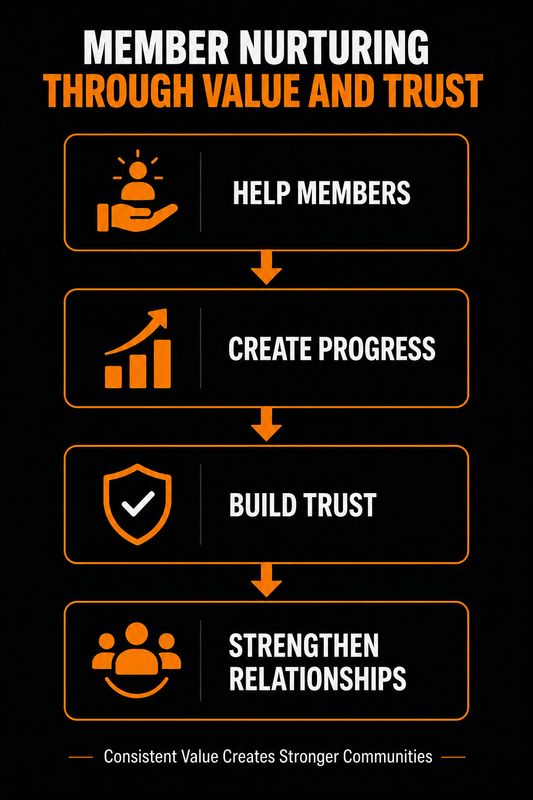
When community owners focus on helping members make progress, trust begins to develop naturally. That trust eventually creates opportunities for conversions, referrals, retention, and long-term growth.
The sale becomes a result of the relationship rather than the purpose of it. This distinction matters because it changes how you approach every interaction inside your community.
Instead of asking:
How do I get this person to buy?
You begin asking:
How do I help this person succeed?
That mindset shift is the foundation of effective member nurturing.
What Nurturing Members Really Means
One of the biggest misconceptions about nurturing is that it's primarily a sales activity. In reality, nurturing has very little to do with selling.
Nurturing is about helping members move closer to the outcome that caused them to join your community in the first place. Every member arrives with a goal.
- A creator wants to grow an audience.
- A business owner wants more clients.
- A trader wants better results.
- A developer wants to improve their skills.
- A fitness enthusiast wants to become healthier.
The specific goal changes depending on the niche, but the principle stays the same.
People join because they want progress. Your job as a community owner is to help them achieve that progress. That's what nurturing actually means.
It means creating an environment where members can consistently move forward.
This can happen through:
- Discussions
- Resources
- Events
- Accountability
- Feedback
- Relationships
- Support
Every positive experience contributes to the member's journey. The mistake many communities make is focusing too heavily on the paid offer while neglecting the member experience itself.
- They spend time explaining features.
- They spend time creating promotions.
- They spend time optimizing pricing.
Meanwhile, members are still struggling to achieve the outcome they originally joined for. The strongest communities reverse this approach. They focus relentlessly on member success. When members succeed, trust develops. When trust develops, conversions become easier and when conversions become easier, the need for aggressive selling disappears.
This is why nurturing should never be viewed as a tactic. It should be viewed as a commitment to helping members succeed.
Progress Creates Trust
Trust isn't built through promises, it's built through experiences.
- A member joins your community. They ask a question. Someone provides a useful answer. Trust increases.
- They attend an event. They learn something valuable. Trust increases.
- They receive feedback that helps them avoid a mistake. Trust increases.
- They achieve a small win because of something they learned inside the community. Trust increases again.
These moments seem insignificant when viewed individually. Collectively, they become incredibly powerful. Because trust rarely appears all at once. It accumulates .
Every helpful interaction contributes a small amount. Over time, members begin associating your community with positive outcomes. That's when the relationship starts becoming meaningful. This is also why communities often outperform traditional audiences.
An audience may consume your content. A community allows people to experience value directly. That experience creates trust much faster, and trust is one of the most valuable assets a community can possess.
Nurturing Is an Ongoing Process
Another common misconception is that nurturing happens at specific moments.
For example:
- After somebody joins
- Before a promotion
- Before a renewal
- Before an upgrade
In reality, nurturing happens continuously. Every interaction contributes to the member experience.
- The way questions are answered.
- The way feedback is handled.
- The way wins are celebrated.
- The way new members are welcomed.
- The way suggestions are acknowledged.
All of these moments shape how members feel about the community. That's why nurturing shouldn't be viewed as a separate activity. It should be embedded into how the community operates.
Communities that only focus on members when they want something tend to struggle, whereas communities that consistently provide value create stronger relationships over time.
Community Owners Play a Bigger Role Than They Realize
Many founders underestimate how much influence they have on the community culture. Members pay attention to the owner's behavior.
- If the owner only appears when announcing something, members notice.
- If the owner disappears for weeks at a time, members notice.
- If the owner rarely interacts outside of promotions, members notice.
The opposite is also true.
- When founders participate regularly, communities feel more alive.
- When founders engage in discussions, members become more comfortable contributing.
- When founders answer questions, members feel supported.
- When founders celebrate wins, members feel recognized.
This doesn't require spending every waking hour inside Discord. It simply requires consistency. Even a small amount of daily interaction can have a significant impact.
The goal isn't becoming the center of every conversation. The goal is remaining connected to the people you're serving, because communities grow strongest when members feel like the people leading them genuinely care about their success.
The Value of Being Helpful Before Being Needed
One of the most effective nurturing strategies is also one of the simplest. Help people before they buy. This sounds obvious, yet it's surprisingly rare.
Many communities become dramatically less helpful the moment they realize somebody isn't ready to purchase. That's a mistake.
Not everyone who says "not right now" is saying "never."
- Sometimes people genuinely can't afford it.
- Sometimes they're waiting for better timing.
- Sometimes they're still evaluating options.
- Sometimes they're simply not ready.
None of those situations eliminate the opportunity for a future relationship. In fact, continuing to provide value often strengthens it. Imagine two communities.
In the first community, a member expresses interest but can't purchase. The conversation ends. In the second community, the member receives advice, resources, and support despite not buying. Which community do you think they'll remember?
People remember generosity .
They remember communities that helped them when there was nothing to gain. And when the timing eventually becomes right, those positive experiences often influence future decisions. This is one of the reasons nurturing works so well. It focuses on long-term relationships instead of short-term transactions.
Why Great Communities Rarely Feel Salesy
The most successful communities don't hide their paid offers. They don't avoid monetization . They simply don't make monetization the center of every interaction. Members should know what opportunities exist. They should understand the value of the paid experience. They should know how to upgrade if they choose to.
But they shouldn't feel pressured .
Pressure creates resistance. Value creates curiosity, and curiosity is often far more powerful. When members consistently see:
- Helpful discussions
- Active participation
- Successful members
- Valuable events
- Useful resources
they naturally begin wondering what additional opportunities exist. That curiosity creates a much healthier path toward conversion than constant promotion ever will. Because people prefer making decisions. They don't enjoy feeling pushed into them.
The communities that understand this tend to nurture relationships far more effectively.
And as a result, they often grow faster too.
Nurturing vs Pestering
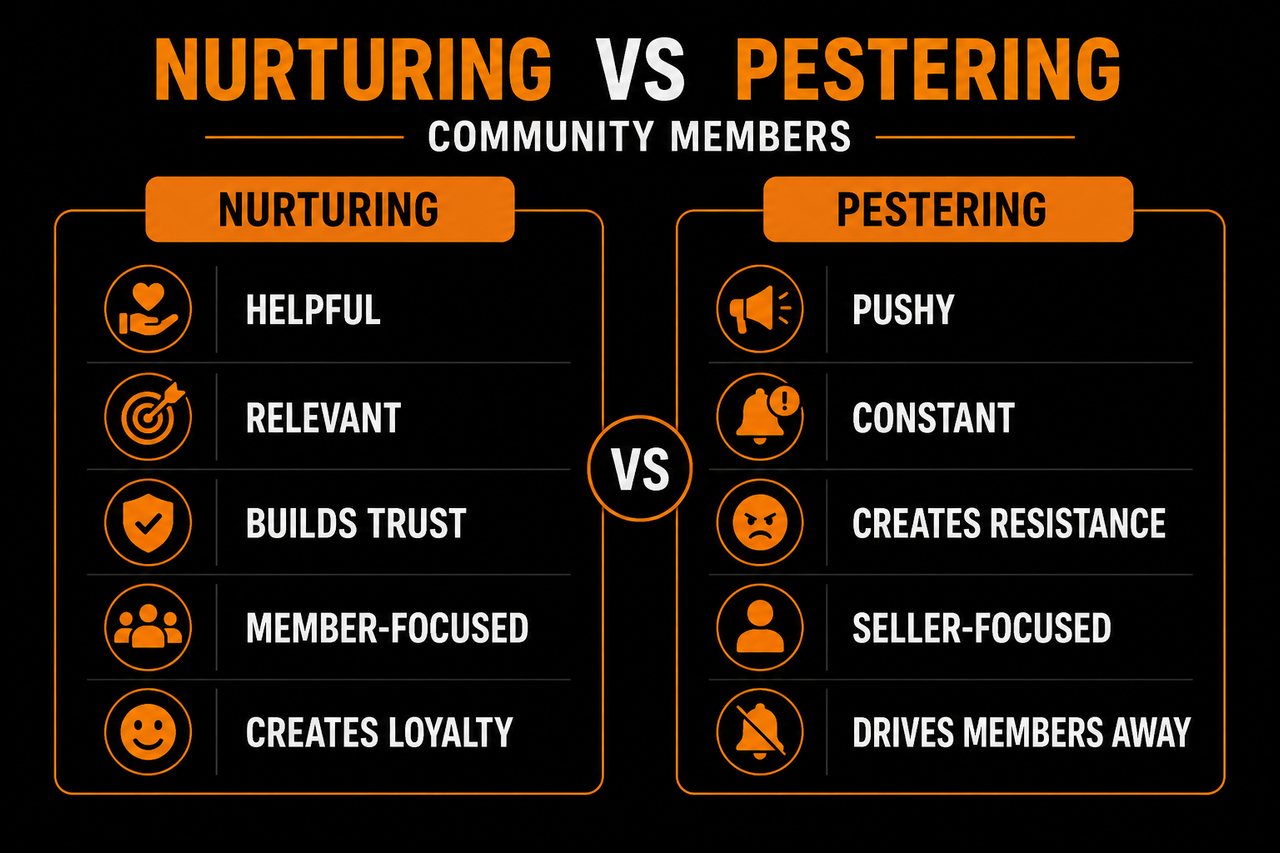
One of the biggest reasons community owners struggle with nurturing is because the line between being helpful and being annoying is often thinner than they realize.
Most people don't set out to pester their members.
They genuinely want to help.
They want members to see opportunities.
They want people to attend events.
They want more participation.
They want more upgrades.
Unfortunately, good intentions don't always create good experiences.
When every interaction starts feeling like a promotion, members begin tuning out. The very efforts designed to increase engagement end up reducing it. This is why understanding the difference between nurturing and pestering is so important.
Nurturing creates trust. Pestering creates resistance. One strengthensrelationships, whereas the other weakens them.
And in a community environment, relationships are everything.
Attention Is a Limited Resource
One mistake community owners make is assuming that more communication automatically creates more engagement. In reality, attention is limited. Every notification competes with:
- Work
- School
- Family
- Other communities
- Social media
- Personal responsibilities
Members are constantly deciding what deserves their attention. This means every message you send carries a cost. Not a financial cost, but an attention cost.
The more frequently you interrupt members without providing meaningful value, the more likely they are to ignore future messages. This is why communication should be intentional, and not constant.
- Every announcement should have a purpose.
- Every notification should earn its place.
- Every message should provide value.
Communities that respect member attention tend to retain it, and communities that abuse member attention eventually lose it.
Stop Treating Every Update Like Breaking News
A common pattern in struggling communities is the overuse of announcements. Everything becomes an announcement.
A new resource.
An event reminder.
A small update.
A minor change.
A random thought.
A question.
A promotion.
A community milestone.
Individually, none of these things are necessarily bad. The problem is volume. When members receive notifications every day, important updates begin looking exactly like unimportant ones. Over time, people stop paying attention. The announcement channel becomes background noise.
This is one of the reasons many communities experience declining engagement despite increasing communication. Members aren't ignoring the content, they're ignoring the interruptions.
The solution isn't eliminating announcements. The solution is protecting their value. Announcements should feel important. When members see a notification, they should immediately think:
This is probably worth checking.
That level of trust only exists when notifications are used carefully.
Why Members Mute Communities
Many community owners assume members mute servers because they're no longer interested. Sometimes that's true. Often it isn't.
In many cases, members mute communities because they're overwhelmed.
- The server became noisy.
- The notifications became excessive.
- The updates became repetitive.
- The pings became frequent.
Eventually, muting the community becomes the easiest solution. This is important because muting is often the first step toward disengagement. Once notifications disappear, participation usually declines.
- The member visits less often.
- Conversations become easier to miss.
- Events become easier to forget.
- The relationship gradually weakens.
This doesn't happen overnight. It's usually a slow process. That's why protecting notification value is so important. Every unnecessary ping increases the risk of members tuning out entirely.
Pings Should Mean Something
One of the fastest ways to reduce the effectiveness of communication is overusing pings. Many community owners become excited when they discover how effective notifications can be. Members see the message immediately. Participation spikes. Engagement increases. The temptation is obvious.
If pings work, why not use them more often? Because effectiveness decreases with repetition. When members are pinged constantly, they stop treating notifications as important. The signal becomes noise.
This is why pings should be reserved for moments that genuinely deserve attention.
Examples include:
- Major announcements
- Important events
- Significant updates
- Community milestones
- Time-sensitive opportunities
Not every conversation deserves a notification. Not every update deserves a ping. Not every promotion deserves an interruption.
The communities that maintain healthy engagement understand this. They treat member attention as something valuable. Because it is.
Promotion Versus Pressure
A community should never be afraid to promote something valuable. Members join communities to discover opportunities. There's nothing wrong with sharing offers, events, resources, or premium memberships. The issue isn't promotion, The issue is pressure.
Promotion says:
Here's something that may help you.
Pressure says:
You should do this right now.
Members react very differently to those approaches. Promotion allows people to make their own decisions, while Pressure attempts to make the decision for them. One builds trust. The other creates resistance.
This distinction becomes especially important when discussing paid memberships. A healthy community makes opportunities visible. An unhealthy community makes opportunities unavoidable.
The goal isn't hiding your offer. The goal is presenting it without making members feel cornered.
Let Members Discover Value
One reason nurturing works better than aggressive selling is because people prefer discovering value themselves. Think about the communities you've personally joined. Chances are you didn't immediately trust every claim being made.
- You probably observed first.
- You watched conversations.
- You looked at member interactions.
- You evaluated the quality of discussions.
- You paid attention to the results people were achieving.
Over time, you formed your own conclusions. Most members behave the same way. They don't want to be convinced. They want evidence.
This is why community owners should focus more on creating visible value and less on explaining why value exists.
- Show member wins.
- Host useful events.
- Encourage meaningful discussions.
- Provide helpful resources.
- Allow the community itself to demonstrate its worth.
The stronger the experience becomes, the less selling is required.
Repetition Without Value Creates Frustration
Another trap communities fall into is repeating the same message over and over again.
- The same promotion.
- The same event announcement.
- The same upgrade reminder.
- The same call to action.
Repetition isn't inherently bad.
The problem occurs when repetition isn't accompanied by new value. Members don't need to hear the same message ten times. What they need is a reason to care about it. Every time you communicate, ask yourself:
Is this helping members?
Or:
Am I simply repeating myself?
That question alone can dramatically improve communication quality. Because effective nurturing focuses on delivering value. Not maximizing message frequency.
Give People Room to Breathe
One thing successful communities understand is that members don't need constant stimulation. Sometimes the best thing you can do is allow conversations to develop naturally.
- Allow members to interact.
- Allow discussions to grow.
- Allow relationships to form.
Communities become stronger when members feel ownership over the environment. That becomes difficult when every conversation is interrupted by another announcement, another promotion, or another attempt to drive engagement. The goal isn't controlling every interaction. The goal is creating an environment where interactions happen naturally.
This requires patience. It requires trust. And occasionally, it requires saying less.
The Best Communities Feel Helpful, Not Persistent
Think about communities you've enjoyed being part of. hey probably didn't feel like they were constantly asking for something. They felt useful, interesting , supportive and welcoming.
Members returned because they wanted to, not because they were repeatedly reminded to. That's the difference between nurturing and pestering.
Nurturing creates reasons to come back. Pestering creates reasons to leave. One builds long-term relationships. The other creates short-term attention, and when you're building a community, long-term relationships are always the better investment.
Building the Relationship First
The strongest communities don't convert members because they have better sales tactics. They convert members because they build stronger relationships. This is one of the biggest differences between communities and traditional businesses. A traditional business can often rely on a good offer, effective advertising, and strong sales processes.
Communities operate differently. Relationships play a much larger role.
People don't simply join because they're interested in the topic, they stay because they feel connected.
- Connected to the founder.
- Connected to the members.
- Connected to the culture.
- Connected to the progress they're making.
That's why relationship-building should always come before selling. Without trust, every promotion feels like a pitch. With trust, recommendations feel helpful.
The offer hasn't changed. The relationship has.
Be Present Inside Your Community
One of the most common mistakes community owners make is becoming invisible. In the beginning, founders are usually everywhere. They're answering questions. Starting discussions, welcoming members, participating in conversations.As the community grows, that often changes.
The founder becomes busy. Systems are introduced. Moderators take over. Announcements continue. But actual interaction becomes less frequent. Over time, members begin seeing the owner as someone who only appears when something needs to be announced.
That's not ideal.
Communities perform best when members feel connected to the people leading them. This doesn't mean spending every hour inside Discord. It simply means remaining visible. A few thoughtful interactions each day can make a significant difference.
- Reply to questions.
- Celebrate wins.
- Join discussions.
- Share experiences.
- Offer feedback.
These small actions help members feel like there's a real person behind the community. And that connection creates trust.
Consistency Matters More Than Intensity
Many founders assume relationship-building requires large amounts of time. It doesn't. Consistency is far more important.
Showing up for fifteen minutes every day is often more valuable than spending four hours online once every two weeks. Members notice consistency.
- They notice familiar names.
- They notice people who repeatedly contribute.
- They notice leaders who remain engaged.
Consistency creates familiarity. Familiarity creates trust and trust, creates loyalty.
This applies not only to founders but also to moderators and community staff. The more consistently the leadership team participates, the stronger the community culture becomes.
Conversations Create Stronger Communities Than Content
Many community owners spend enormous amounts of time creating content.
- Courses.
- Resources.
- Templates.
- Videos.
- Guides.
All of these things can be valuable. But content alone rarely creates a thriving community. Conversations do. Content helps people learn. Conversations help people connect, and connection is often the reason members continue paying month after month.
Think about the communities you've personally stayed in. Chances are you didn't remain because of a single resource. You stayed because of the people, the discussions. the relationships and the opportunities to learn from others.
That's why communities should focus on creating conversations rather than simply distributing information.
A resource gets consumed once whereas a conversation can continue creating value for days.
Give Members Reasons to Interact
Relationships don't appear automatically. People need opportunities to interact. This is where community activities become important. Simple activities can dramatically increase participation. Examples include:
- Question of the Day.
- Weekly Wins.
- Accountability Check-ins.
- Community Challenges.
- Live Q&A Sessions.
- Member Spotlights.
- Group Discussions.
- Office Hours.
The purpose of these activities isn't entertainment. The purpose is interaction. Every interaction increases familiarity. Every interaction creates opportunities for relationships to develop. And relationships are one of the strongest drivers of retention.
Events Are Relationship Accelerators
If there's one thing that consistently strengthens communities, it's events. Events bring people together.
- They create shared experiences.
- They create conversations.
- They create memories.
Most importantly, they create opportunities for members to interact with people they might never speak to otherwise. This is why community owners should host events whenever possible. And ideally, those events should involve the community owner directly. Members join communities because of the people leading them.
When the owner regularly appears on calls, participates in discussions, answers questions, and engages with members, relationships form much faster. That doesn't mean every event needs to be complicated. Some of the best events are incredibly simple. Examples include:
- Weekly Q&A calls.
- Office hours.
- Member networking sessions.
- Community hot seats.
- Accountability calls.
- Workshop sessions.
Consistency matters more than complexity. A simple event that happens every week often creates more value than a massive event that happens once every six months.
Giveaways Should Reward Participation
Many communities use giveaways. Unfortunately, many use them poorly. A giveaway shouldn't exist solely to generate activity. It should strengthen the community. One of the best ways to achieve this is rewarding participation. For example:
- Helping other members.
- Contributing useful advice.
- Attending events.
- Participating in discussions.
- Completing challenges.
This approach reinforces the behaviors you want to encourage. More importantly, it creates a feeling that the community is giving something back. People enjoy feeling appreciated. They enjoy feeling recognized, and recognition often matters more than the actual prize itself.
A thoughtful giveaway can strengthen culture. A poorly executed giveaway simply creates temporary activity.
Feedback Is One of the Most Valuable Resources You Have
Many founders spend significant amounts of time guessing what members want. Meanwhile, members are actively telling them. The problem is that nobody is listening. This is why suggestion channels and feedback systems are so important. Members experience your community differently than you do.
- They see friction points.
- They encounter confusion.
- They discover opportunities for improvement.
That perspective is incredibly valuable, yet many communities treat feedback as an afterthought. The strongest communities do the opposite.
- They actively encourage suggestions.
- They ask questions.
- They seek opinions.
- They involve members in the process of improving the community.
This creates two benefits.
First, the community improves. Second, members become more invested. People care more about things they've helped shape. When members see their feedback being implemented, they feel heard, and feeling heard strengthens relationships.
Community Culture Is Built Through Small Moments
Many founders think culture is created through rules. In reality, culture is created through behavior.
- The way people communicate.
- The way wins are celebrated.
- The way disagreements are handled.
- The way newcomers are treated.
- The way leaders interact with members.
These small moments shape the community far more than any document ever could. That's why relationship-building is so important. Communities aren't built through systems alone. They're built through people.
- Every interaction contributes to the culture.
- Every conversation reinforces expectations.
- Every positive experience strengthens the environment.
Over time, those moments compound into something much larger. A community where people genuinely enjoy participating.
Relationships Create Relationship Equity
One useful way to think about nurturing is through relationship equity.
- Every positive interaction deposits trust into the relationship.
- Every helpful conversation adds value.
- Every useful recommendation adds value.
- Every moment of support adds value.
Over time, these deposits accumulate.
Then, when you eventually make a recommendation, launch an offer, announce a promotion, or introduce something new, members already trust your intentions. Because the relationship isn't based on transactions.
It's based on value.
This is one of the reasons communities that focus heavily on helping often outperform communities that focus heavily on selling. The relationship exists before the offer appears, and that's an incredibly powerful position to be in.
Help First, Sell Second
At its core, nurturing is surprisingly simple.
Help people. That's it.
- Answer questions.
- Provide guidance.
- Celebrate wins.
- Listen to feedback.
- Create opportunities for interaction.
- Be present.
- Be useful.
- Be consistent.
The more members associate your community with positive experiences, the stronger the relationships become. And the stronger the relationships become, the easier everything else gets.
- Retention improves.
- Referrals increase.
- Engagement grows.
- Conversions become easier.
Not because people were sold to, but because people were helped, and in communities, that's almost always the better strategy.
When the Upgrade Feels Natural
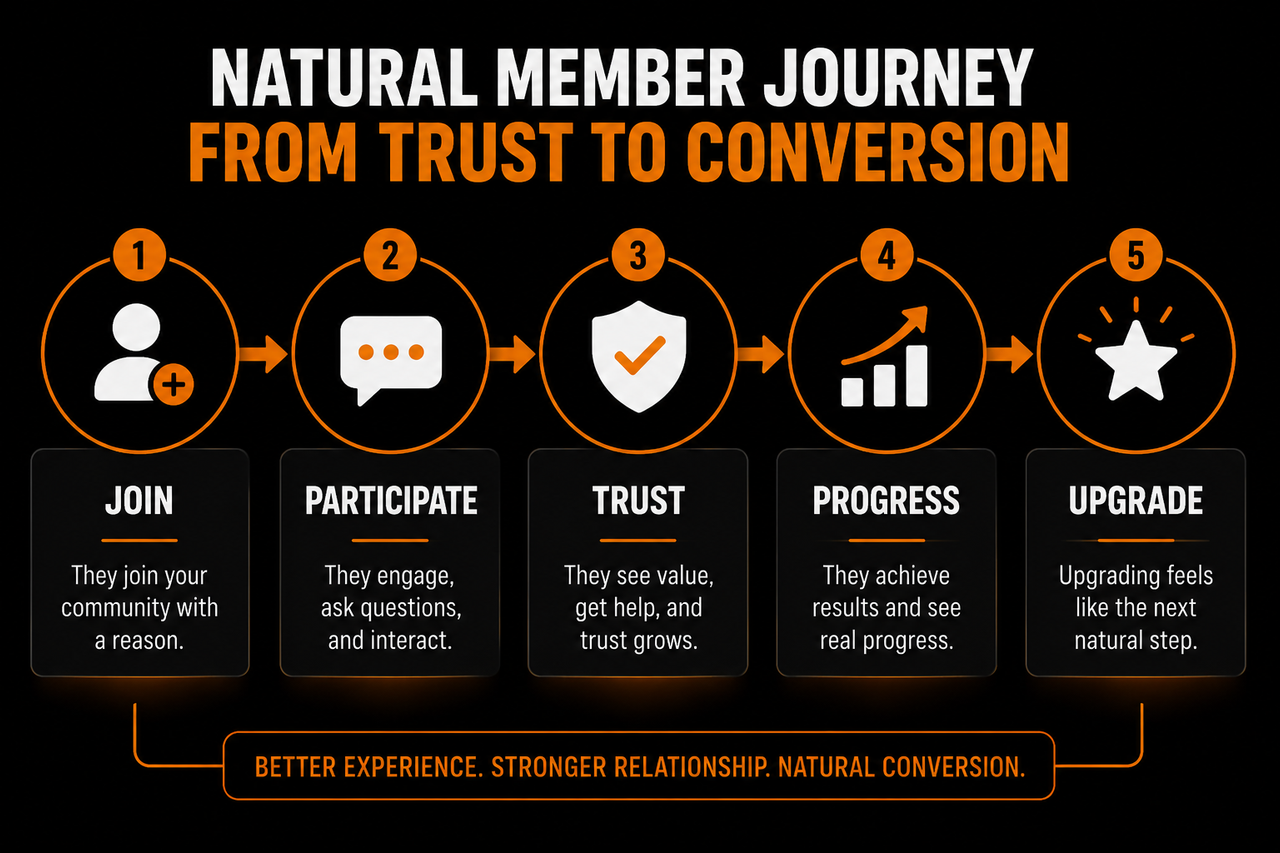
One of the biggest misconceptions about conversions is that members upgrade because they were convinced. In reality, the best conversions rarely feel like persuasion, they feel like progression. The member understands the value. They trust the community. They've experienced positive outcomes.
They know what the next step looks like. Upgrading simply makes sense. This is a very different experience from trying to force somebody into a decision.
When communities focus too heavily on conversion tactics, members often feel pressure, but when communities focus on helping members succeed, conversions tend to happen naturally.
The difference comes down to timing.
People don't buy because a community owner wants them to buy. People buy when they're ready. Understanding that principle changes how you think about growth.
Instead of trying to accelerate decisions, you focus on creating the conditions that make decisions easier.
Readiness Matters More Than Persuasion
Every community has members at different stages of their journey. Some are brand new. Some are still evaluating whether the community is right for them. Some are actively participating. Some are already seeing results. Some are considering upgrading.
Treating all of these members the same rarely works.
A member who joined yesterday doesn't need the same message as someone who has been actively participating for three months. The newer member is still building trust. The experienced member may already understand the value.
This is why readiness matters so much.
The strongest communities understand where members are in their journey and communicate accordingly. Rather than constantly asking people to upgrade, they focus on helping members move to the next stage naturally. When readiness exists, conversions become much easier, and when readiness doesn't exist, additional persuasion usually creates resistance.
Let Members Experience the Difference
One reason upgrades feel natural in successful communities is because members already understand the value they're moving toward. They've seen it. They've experienced parts of it. They've watched other members benefit from it.
This is why visibility matters. People should understand what exists beyond the free experience. Not through aggressive promotion.
Through observation.
For example, members might see:
- Success stories from paid members.
- Discussions about wins.
- Event highlights.
- Testimonials.
- Community milestones.
- Shared experiences.
Over time, members begin connecting the dots. They stop asking:
Is the paid membership worth it?
And start asking:
Would this help me too?
That's a much healthier position to be in, because the desire to upgrade comes from curiosity and understanding rather than pressure.
Social Proof Does the Heavy Lifting
One of the strongest conversion tools any community possesses is social proof.
- Not marketing.
- Not copywriting
- Not sales tactics.
Social proof.
People pay attention to what other people are experiencing. When members consistently see others achieving results, it changes how they view the community. Success becomes tangible.The value becomes easier to understand. The opportunity becomes easier to trust.
This is why communities should actively celebrate member wins.
Not because it helps marketing, but because it helps members.
- When someone lands their first client, celebrate it.
- When someone reaches a milestone, celebrate it.
- When someone achieves a breakthrough, celebrate it.
- When someone solves a difficult problem, celebrate it.
These moments create momentum throughout the entire community.
Members become inspired. Participation increases. Trust strengthens, and future conversions become easier.
Member Wins Are More Powerful Than Sales Messages
A sales message tells people what might happen. A member win shows people what did happen.
That's a huge difference.
Most people approach claims with skepticism. That's normal.
But when another member shares their experience, the information feels more credible. It's coming from someone who has actually gone through the process. This is why member success stories often outperform traditional promotional content.
- They feel authentic.
- They feel relatable.
And they help potential buyers imagine themselves achieving similar outcomes. The strongest communities don't manufacture these moments, they simply make them visible.
Every win becomes evidence. Every success story becomes proof. Every positive experience strengthens the community's credibility.
The Best Promotions Feel Like Opportunities
Promotions can absolutely increase conversions. The mistake is relying on them too heavily. A promotion should help somebody act. It shouldn't be the only reason somebody acts.
If the underlying value isn't clear, a discount rarely solves the problem. The member still doesn't understand why they should buy.The strongest promotions support existing demand. They don't create demand from nothing. Examples include:
- Launch promotions.
- Community anniversaries.
- Seasonal offers.
- Event-related bonuses.
- Founder pricing for early members.
These opportunities create a reason to act now rather than later. But they only work when trust and value already exist. Without those foundations, promotions simply become noise.
Scarcity Loses Power When It's Constant
One mistake many communities make is creating urgency too frequently.
- Every week becomes a limited-time offer.
- Every month becomes the last chance.
- Every announcement becomes urgent.
Eventually, members stop believing it. Scarcity only works when it's genuine.
If people know another promotion will appear next week, today's promotion loses significance. This is why community owners should use urgency carefully. Protect its value, use it when it makes sense and avoid turning every offer into an emergency.
Members appreciate honesty, and honesty strengthens trust.
The Upgrade Should Feel Like the Next Logical Step
The strongest conversions happen when members reach a point where upgrading feels obvious. Not because somebody pressured them, but Because the next step genuinely makes sense.
- They've experienced value.
- They've built relationships.
- They've participated in discussions.
- They've attended events.
- They've achieved progress.
The paid experience simply becomes the natural continuation of that journey. Think about it from the member's perspective. If somebody has already benefited significantly from the free experience, investing further feels far less risky. The uncertainty is gone. They already know what to expect.
That's why successful communities focus so heavily on creating positive experiences before asking for commitments. The better the experience becomes, the easier the decision becomes.
Trust Is the Real Conversion Mechanism
When people discuss conversions, they often focus on tactics.
- Headlines.
- Funnels.
- Pricing.
- Offers.
While those things matter, they're rarely the primary reason members upgrade. Trust is. Trust influences whether members:
- Attend events.
- Follow recommendations.
- Participate in discussions.
- Refer friends.
- Purchase memberships.
- Remain subscribed.
Trust sits beneath almost every meaningful action inside a community. That's why nurturing is so important. The purpose isn't simply improving conversions. The purpose is strengthening trust. Conversions happen as a result.
Communities Grow Best When Members Feel Understood
One of the most overlooked aspects of nurturing is understanding. People want to feel understood. They want to feel like somebody recognizes their goals, challenges, and motivations. The communities that achieve this consistently tend to build stronger relationships.
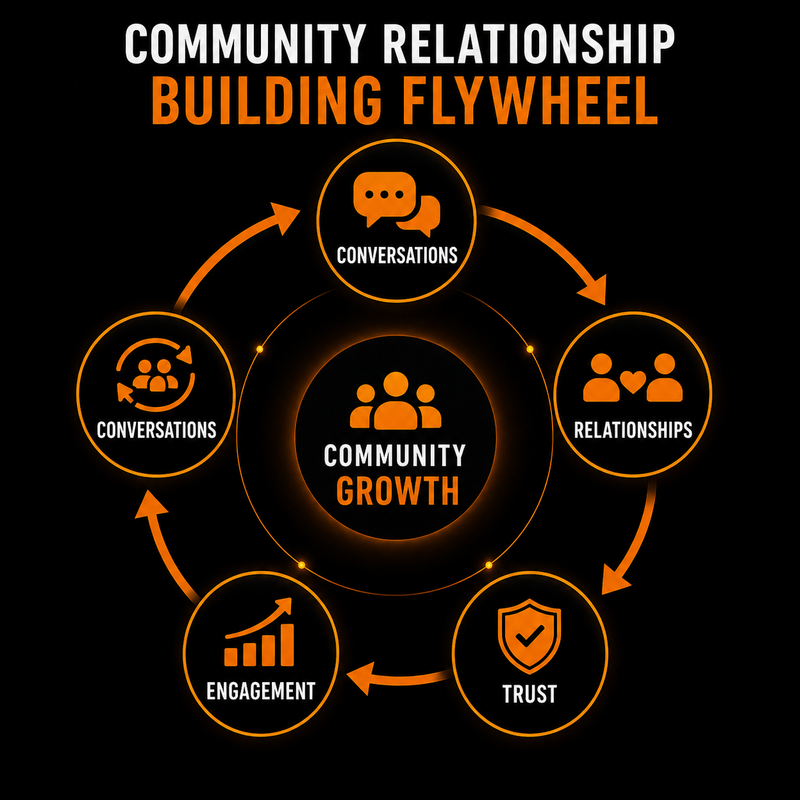
Members feel comfortable asking questions. They feel comfortable sharing challenges.They feel comfortable participating.That comfort creates engagement.
Engagement creates trus, trust creates loyalty, and loyalty creates growth.
This cycle repeats itself continuously inside healthy communities. The stronger the relationships become, the stronger the community becomes.
Final Thoughts
Nurturing members isn't about finding better ways to sell. It's about creating better experiences. The communities that grow sustainably focus on helping members achieve meaningful outcomes.
- They answer questions.
- They host events.
- They celebrate wins.
- They listen to feedback.
- They remain visible.
- They create opportunities for connection.
Most importantly, they build relationships before asking for anything in return.
That's what makes nurturing so powerful.
When members trust the community, understand the value, and feel supported throughout their journey, upgrades stop feeling like purchases. They start feeling like progress. And that's usually when the best conversions happen.
Not because somebody was pressured. Not because somebody was convinced.
Because somebody genuinely believed the next step was worth taking.