

How to Onboard New Members in a Paid Community
Someone has just joined your Discord community.
Now what?
For many community owners, this is where the onboarding process begins and ends. A welcome message is sent, a role is assigned, and members are expected to explore the server on their own. While this approach might work for a handful of experienced users, most new members need far more guidance before they become active participants.
The first few minutes after someone joins determine whether they stay long enough to experience the value your community offers. If they immediately understand where to go, what to do, and how your community helps them achieve their goals, they're far more likely to return. If they feel overwhelmed or unsure where to begin, many will quietly leave before interacting with a single person.
Effective member onboarding isn't about explaining every channel or introducing every feature your community has. It's about removing uncertainty and helping new members build momentum through small, meaningful actions. Every step should make it easier for them to become part of the community rather than simply another name on the member list. link text Whether you're running a paid Discord community for coaching, education, networking, SaaS, fitness, investing, or any other niche, the principles remain the same. Great onboarding helps members find value quickly, builds confidence from the very beginning, and creates the foundation for long-term retention.
In this guide, we'll walk through exactly how to onboard new members in a paid community, what their first hour should look like, how to automate repetitive onboarding tasks without losing the personal touch, and how to turn new members into engaged contributors who genuinely enjoy being part of your community.
Why Member Onboarding Makes or Breaks Retention
Many community owners believe retention starts a few weeks after someone joins.
In reality, retention starts the moment a member enters your server.
Every interaction that follows either builds confidence or creates friction. The easier it is for someone to understand your community, participate in conversations, and experience their first success, the more likely they are to become a long-term member.
Unfortunately, many communities unintentionally make this process harder than it needs to be.
The First Hour Shapes Every Member's Experience
Think back to the last time you joined a new online community.
You were probably asking yourself questions like:
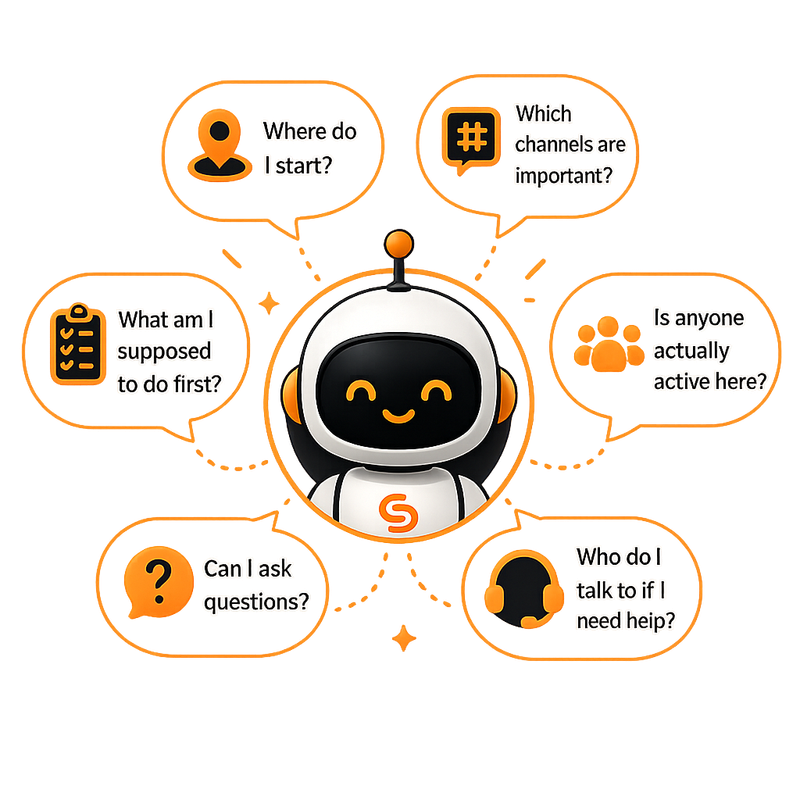
These questions might never be typed into chat, but every new member asks them internally.
A good onboarding experience answers those questions before members even have to ask them.
Instead of leaving people to figure everything out themselves, your onboarding should guide them through a simple sequence of actions that gradually builds familiarity with your community.
The goal isn't to teach members everything in one sitting.
The goal is to make the next step obvious.
Why Great Communities Still Lose New Members
One of the biggest misconceptions is that communities lose members because they don't provide enough value.
More often than not, the opposite is true.
Many paid communities contain incredible resources, knowledgeable members, and experienced mentors. The problem isn't a lack of value.
It's that new members never discover it.
Imagine joining a server with:
- fifty text channels,
- multiple voice channels,
- resource libraries,
- downloadable templates,
- recordings,
- announcements,
- events,
- exclusive discussions,
- and dozens of ongoing conversations.
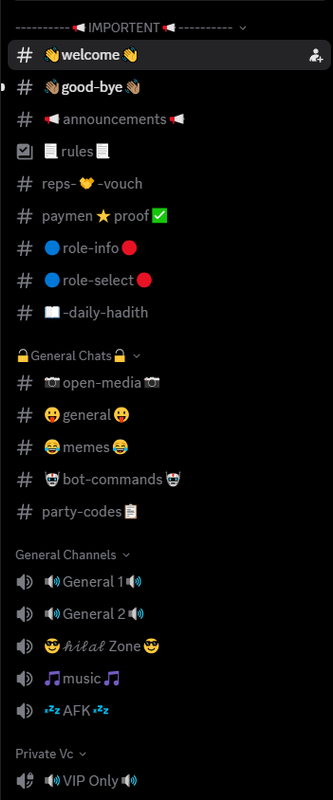
Everything might be useful.
Everything might also feel overwhelming.
Without clear direction, new members don't know where to begin. Instead of exploring confidently, they browse a few channels, promise themselves they'll come back later, and eventually forget about the community altogether.
This isn't a content problem.
It's an onboarding problem.
Onboarding Is More Than a Welcome Message
For many communities, onboarding consists of three things:
- An automated welcome message.
- A rules channel.
- A member role.
Technically, that's onboarding.
Practically, it accomplishes very little.
Welcoming someone into your Discord server doesn't automatically help them become part of your community.
Effective onboarding should answer three questions as quickly as possible:
What is this community about?
Members should immediately understand what your community helps people achieve.
What should I do first?
There should never be any doubt about the next step.
How do I become involved?
Members should know exactly how to introduce themselves, ask questions, attend events, and participate in conversations.
Once those three questions have been answered, the rest of the onboarding experience becomes much more natural.
Think About the Member Journey, Not the Server
One mistake many community owners make is designing onboarding around Discord itself.
They explain:
- categories,
- permissions,
- bots,
- reactions,
- roles,
- and server features.
While these things matter, they aren't what new members care about.
Members care about achieving the goal that brought them into your community.
Instead of thinking:
"How do I explain my server?"
Ask yourself:
"How do I help someone reach their first success as quickly as possible?"
That shift completely changes how you approach onboarding.
Every message, every channel, and every interaction should move members one step closer to experiencing the outcome they originally joined for.
The Purpose of Onboarding Isn't Just Retention
Most people associate onboarding with reducing churn.
While that's certainly one benefit, effective onboarding serves several purposes simultaneously.
A thoughtful onboarding experience should:
- Help members feel welcomed.
- Reduce confusion.
- Encourage early participation.
- Build confidence.
- Introduce members to the right resources.
- Connect people with the wider community.
- Gather information that improves their experience.
Notice that selling isn't on that list.
The primary objective is helping people succeed.
Interestingly, communities that focus on helping members first often see higher upgrade rates, stronger retention, and better word-of-mouth growth because trust is established before anything else.
That's why onboarding shouldn't feel like a sales funnel.
It should feel like someone personally showing a new member around.
Build Trust Before Asking for Commitment
Many community owners make an important mistake before onboarding even begins.
Instead of inviting potential members into the community, they immediately send them to a payment page.
That approach works well for people who already know, trust, and understand what they're buying.
Most social media traffic doesn't fall into that category.
Someone clicking your profile from YouTube, Instagram, TikTok, LinkedIn, or X is usually curious rather than ready to purchase. They're looking for proof that your community delivers value before making a financial commitment.
Giving these visitors an opportunity to experience your community first significantly reduces friction.
When people can explore conversations, see members helping one another, read success stories, and understand the culture you've built, they naturally become more confident in your offering.
Instead of convincing someone to buy immediately, you're giving them the opportunity to understand why your community is worth joining.
Trust almost always comes before commitment.
Communities that embrace this philosophy tend to create stronger relationships while attracting members who genuinely want to participate rather than simply consume content.
Every New Member Is Valuable Data
One aspect of onboarding that's often overlooked is the opportunity to learn more about your members.
Most communities focus exclusively on introducing themselves.
The best communities also allow members to introduce themselves in return.
Simple onboarding questions can reveal valuable information such as:
- Where did you discover our community?
- What are you hoping to achieve?
- What's your current experience level?
- What challenges are you trying to solve?
These questions don't just create conversation.
They help community owners deliver a better experience.
For example, knowing where members discovered your community can help answer questions like:
- Which marketing channels are performing best?
- Which creators or campaigns are bringing in members?
- Where should you invest more time or advertising budget?
Imagine welcoming one hundred new members over the course of a month.
If seventy discovered you through YouTube while only five came from LinkedIn, you immediately have valuable insight into where your audience spends their time.
Rather than relying on assumptions, your onboarding process becomes a source of real marketing intelligence.
At the same time, asking members about their goals allows you to recommend relevant resources, discussions, or events based on what they're actually trying to accomplish.
Onboarding should feel like the beginning of a conversation, not the completion of a form.
Collect Information Naturally, Not Immediately
Many communities ask for too much too soon.
The moment someone joins, they're presented with multiple forms, verification steps, questionnaires, and requests for personal information.
While the intention is usually good, the timing often isn't.
People are much more willing to answer questions after they've already received something valuable.
Instead of asking for an email address immediately, consider first helping members navigate the server, introducing them to the community, and giving them a quick win.
Once they've experienced value, asking them to subscribe for event reminders, exclusive updates, or future resources feels far more natural.
The same applies to marketing questions.
Rather than making onboarding feel like market research, integrate simple questions into the welcome experience itself. Members are generally happy to share where they came from or what they're hoping to achieve when they understand that the information will improve their experience.
Good onboarding gathers information.
Great onboarding gathers information without making members feel like they're filling out a survey.
The next step is understanding exactly what happens after someone joins your server.
What should members see first?
Which actions should they complete?
How much information should you introduce at once?
Most importantly, how do you guide someone from joining your community to feeling like they genuinely belong?
That's exactly what we'll cover next.
What a Good First Hour Looks Like
A successful onboarding experience isn't measured by how much information you give new members.
It's measured by how quickly they experience value.
The first hour inside your community should be intentional. Every interaction should build confidence, reduce uncertainty, and encourage members to take another small step forward. Rather than overwhelming people with dozens of channels and lengthy welcome messages, guide them through a simple journey that helps them feel comfortable participating.
Think of onboarding as a guided experience rather than a checklist. Instead of asking, "What should I tell new members?", ask, "What should new members accomplish before their first hour is over?"
Communities that answer this question well often see stronger engagement, better retention, and higher participation because members immediately feel like they're making progress.
Step 1: Welcome Members Immediately
The moment someone joins your community, they should know they've arrived in the right place.
This doesn't require an elaborate welcome sequence or a wall of text explaining every feature of your server. In fact, shorter and more focused welcome messages usually perform much better.
A good welcome message should accomplish three things:
- Confirm that the member joined successfully.
- Explain what the community helps people achieve.
- Tell them exactly what to do next.
For example, instead of writing:
"Welcome to our server! Please read the rules, explore the channels, check announcements, browse the resources, introduce yourself, attend our events, and enjoy your stay."
A more effective approach would be:
"Welcome! 👋 We're excited to have you here. Start by introducing yourself in #introductions, then head over to #start-here where we'll guide you through your first steps."
Notice how there's only one clear action.
People are far more likely to complete one simple task than choose between ten different options.
Step 2: Guide Members to One Clear Starting Point
One of the biggest mistakes community owners make is assuming every channel deserves equal attention.
It doesn't.
Every community should have a clearly defined starting point.
Whether it's a #start-here channel, a welcome hub, or an onboarding dashboard, members should never wonder where to begin.
This channel shouldn't contain everything.
Instead, it should act as a roadmap.
For example, your onboarding flow might look something like this:
- Read the welcome message.
- Introduce yourself.
- Tell us what you're hoping to achieve.
- Explore the recommended channels.
- Claim your community roles.
- Join today's discussion.
Each completed step naturally leads to the next one.
By breaking onboarding into smaller actions, members remain engaged without feeling overwhelmed.
Step 3: Help Members Experience Their First Quick Win
One of the fastest ways to increase retention is by helping members accomplish something meaningful as soon as possible.
This is often called a quick win.
A quick win doesn't need to be life-changing.
It simply needs to reinforce the decision to join your community.
Depending on your niche, that quick win could be:
- Finding an answer to a common question.
- Downloading a useful template.
- Receiving feedback from another member.
- Joining a networking conversation.
- Completing a beginner challenge.
- Watching a short onboarding video.
- Receiving personalised recommendations based on their goals.
The objective isn't to impress members with everything your community offers.
It's to give them a reason to think:
"I'm glad I joined."
That feeling creates momentum.
Once members experience value, they're naturally more willing to continue exploring.
Step 4: Encourage Members to Introduce Themselves
Introductions are about much more than saying hello.
They're often the first real conversation a member has inside your community.
A well-designed introduction channel helps people feel recognised while making it easier for existing members to start conversations.
Rather than asking members to simply write a few sentences about themselves, consider providing prompts such as:
- Where are you joining from?
- What are you hoping to achieve?
- How long have you been working in this field?
- What's one goal you'd like to accomplish this month?
- What's one interesting fact about yourself?
These prompts remove the awkwardness of writing an introduction while giving the community useful context.
More importantly, don't let introductions go unanswered.
Whether it's moderators, community managers, or experienced members, someone should acknowledge every introduction.
A simple welcome message can make the difference between someone feeling ignored and someone feeling like they've joined an active community.
Step 5: Learn About Your Members
Good onboarding introduces members to your community.
Great onboarding allows your community to learn about its members.
This information doesn't need to be complicated.
Even a few simple questions can dramatically improve the experience for both members and community managers.
For example:
- Where did you hear about us?
- What's your biggest challenge right now?
- What are you hoping to learn?
- What's your experience level?
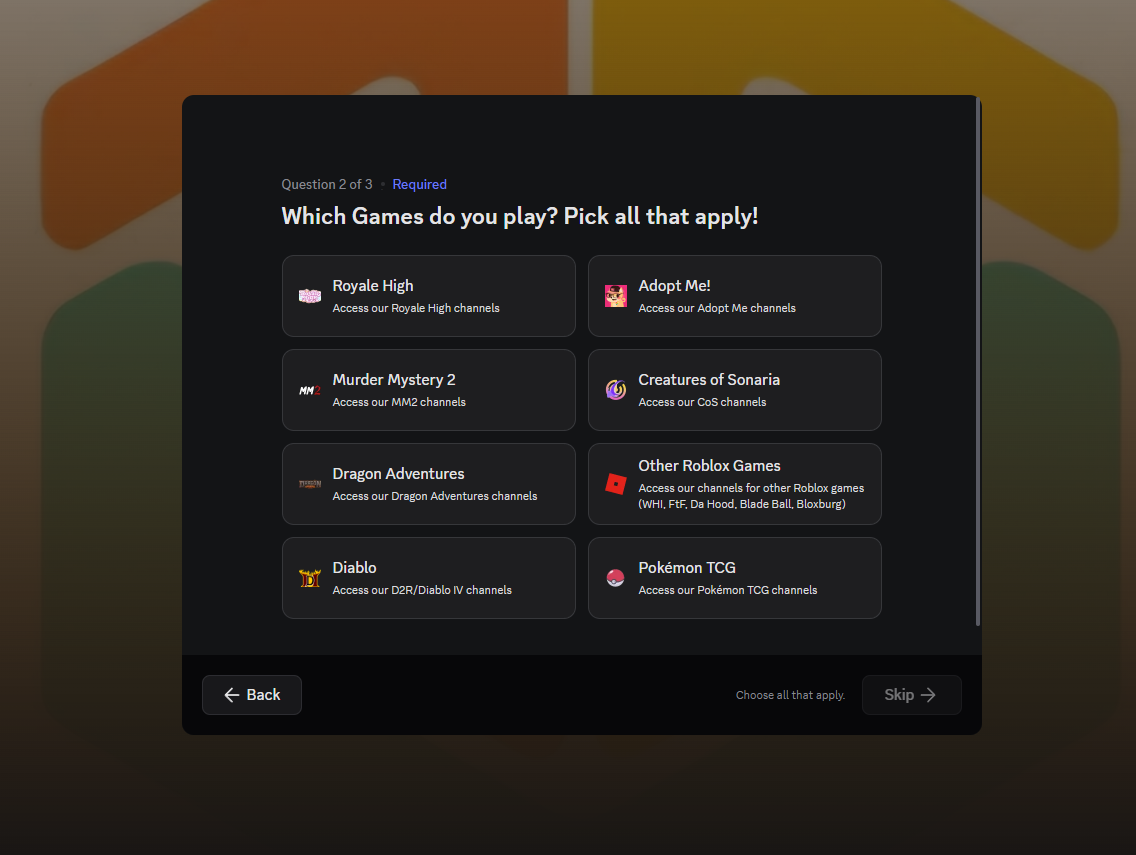
These questions serve two purposes.
First, they allow you to personalise the onboarding experience by recommending relevant resources or discussions.
Second, they provide valuable insights into how your community is growing.
Imagine discovering that most of your new members are arriving from YouTube while very few are coming from Facebook.
That information helps you make smarter marketing decisions without relying on guesswork.
Instead of assuming which channels perform best, your onboarding process becomes a reliable source of real-world data.
Step 6: Ask for an Email at the Right Time
Many communities ask for an email address immediately after someone joins.
While there's nothing inherently wrong with collecting emails, timing makes a significant difference.
Imagine walking into a networking event.
Before anyone introduces themselves, you're asked to fill out multiple forms and provide your contact details.
It feels transactional.
Now imagine attending the event, meeting interesting people, participating in discussions, and finding value before someone asks whether you'd like to receive updates about future events.
That request feels much more natural.
Community onboarding works the same way.
Instead of making email collection the first priority, focus on helping members experience value first.
Once they've:
- explored the server,
- introduced themselves,
- participated in discussions,
- or received their first quick win,
asking them to join your mailing list becomes far more effective.
Position the email as something beneficial to them.
For example:
- Event reminders.
- Exclusive resources.
- Weekly community updates.
- New content announcements.
- Workshop registrations.
Members should feel like they're gaining something by sharing their email, not simply helping you grow your mailing list.
Step 7: Recommend Relevant Channels Instead of Every Channel
One common onboarding mistake is sending members to every channel in the server.
The result is predictable.
People open a few channels, become overwhelmed, and stop exploring.
Instead, recommend channels based on the member's interests.
For example:
A beginner might be directed toward:
- #start-here
- #introductions
- #questions
- #resources
An experienced member might instead receive recommendations for:
- Advanced discussions.
- Member networking.
- Weekly masterminds.
- Community projects.
The fewer decisions members need to make during onboarding, the more likely they are to keep moving forward.
Remember, onboarding isn't about showing everything.
It's about showing the right things at the right time.
Common Mistakes During the First Hour
Even experienced community owners sometimes introduce unnecessary friction during onboarding.
A few common mistakes include:
Too much information
Long welcome messages often go unread. Prioritise clarity over completeness.
Too many channels
Members shouldn't have to decide between dozens of conversations immediately.
No human interaction
Automated messages are useful, but they shouldn't replace genuine conversations.
No clear next step
Members should always know what they should do after completing the previous step.
Treating onboarding like a checklist
Successful onboarding isn't about completing tasks.
It's about helping members feel comfortable enough to participate naturally.
A well-designed first hour doesn't just introduce members to your Discord server.
It introduces them to your community.
By guiding people through a series of small, intentional interactions, you remove uncertainty, create early momentum, and dramatically increase the likelihood that they'll return again tomorrow.
The challenge, of course, is that manually guiding every new member through this journey becomes increasingly difficult as your community grows.
That's where scalable onboarding systems become essential.
Onboarding New Members Without Doing It Manually
As your community grows, manually onboarding every new member becomes increasingly difficult.
When your server has ten new members a week, personally welcoming each person, answering questions, recommending channels, and checking in a few days later is manageable. When that number grows to hundreds of new members every month, maintaining the same experience becomes almost impossible without additional systems in place.
This is where many communities unintentionally lose the personal touch that made them successful in the first place.
Fortunately, scaling your onboarding process doesn't mean replacing human interaction with automation. Instead, it means using automation to handle repetitive tasks while allowing your team to spend more time building genuine relationships.
The objective isn't to remove people from the onboarding process.
It's to ensure every member receives a consistent, high-quality experience, regardless of whether they're the first person to join your community or the thousandth.
What Parts of Onboarding Should Be Automated?
Not every part of onboarding requires a community manager.
Some tasks are repetitive by nature and can be handled automatically without reducing the quality of the member experience.
Examples include:
- Sending welcome messages.
- Explaining the first steps.
- Assigning roles.
- Providing channel recommendations.
- Sharing important resources.
- Answering frequently asked questions.
- Sending reminders to complete onboarding.
- Directing members toward upcoming events.
Automating these routine tasks ensures every new member receives the same high-quality introduction without requiring someone to manually repeat the same information dozens of times each day.
However, automation should support conversations, not replace them.
Members still appreciate genuine replies, thoughtful discussions, and interactions with real people. Automation simply creates the foundation that allows those conversations to happen more naturally.
Automation Should Feel Like Guidance, Not a Checklist
One of the biggest misconceptions about automated onboarding is that it needs to feel robotic.
Many communities rely on lengthy automated messages that read more like instruction manuals than conversations.
For example:
"Welcome. Please complete steps one through eight before continuing."
While technically effective, this type of onboarding feels transactional.
Instead, think about how you would personally welcome someone if they joined your community.
You'd probably say hello.
Ask what brought them there.
Learn a little about them.
Point them toward useful resources.
Answer a few questions.
Introduce them to other members.
Good automation should replicate that experience as closely as possible.
Rather than overwhelming members with information, guide them one step at a time.
A conversational onboarding experience feels significantly more personal than receiving a single message containing twenty different instructions.
Build an Onboarding Journey, Not a Single Welcome Message
One welcome message isn't onboarding.
It's simply the beginning.
Instead, think about onboarding as a sequence of interactions spread across the member's first few hours or days inside your community.
For example:
Immediately after joining
- Welcome the member.
- Explain the purpose of the community.
- Recommend the first channel.
A few minutes later
- Encourage them to introduce themselves.
- Ask what they're hoping to achieve.
After they've introduced themselves
- Recommend relevant channels based on their goals.
- Share beginner resources.
- Suggest an upcoming event.
The following day
- Check whether they've found what they were looking for.
- Encourage participation in a discussion.
- Highlight useful community features they may have missed.
Each interaction builds naturally upon the previous one.
Instead of overwhelming members all at once, you're guiding them through a journey that feels much more approachable.
Learn About Members While Improving Their Experience
One of the most valuable aspects of onboarding is that it creates an opportunity to learn about every new member.
Many communities focus entirely on explaining themselves.
Successful communities also ask thoughtful questions.
For example:
- What brought you here?
- What are you hoping to achieve?
- How experienced are you?
- Which topics interest you the most?
These questions allow you to personalise the onboarding experience while making members feel like the community genuinely cares about their goals.
They also help moderators provide more relevant recommendations.
A beginner doesn't need the same resources as an experienced professional.
Someone interested in networking shouldn't receive the same recommendations as someone primarily looking for educational content.
The more context you gather during onboarding, the easier it becomes to create a personalised experience.
Onboarding Is Also a Marketing Tool
Most people think onboarding is purely about retention.
In reality, it can also become one of the most valuable sources of marketing data for your community.
One simple question can provide remarkable insights:
"Where did you hear about us?"
Possible responses might include:
- YouTube
- X (Twitter)
- Referral
- Google Search
- Friend
- Newsletter
Over time, these responses reveal patterns that would otherwise remain hidden.
Imagine onboarding one thousand members over the course of a year.
Your data shows:
- 520 members joined from YouTube.
- 210 joined through referrals.
- 180 came from Instagram.
- 60 discovered you through Google.
- 30 joined from LinkedIn.
Suddenly, your marketing decisions become much easier.
Rather than spreading your efforts equally across every platform, you can double down on the channels that consistently attract high-quality members.
Even more importantly, you can begin comparing not only where members come from, but which channels produce the most engaged and highest-retaining members.
Sometimes the platform generating the most traffic isn't the one producing the strongest community members.
That's an insight you can only discover by collecting the right information during onboarding.
Capture Emails After Building Trust
Email remains one of the most valuable communication channels available to community owners.
Unlike social media platforms, where algorithms determine who sees your content, email allows you to maintain direct communication with your members.
However, timing matters.
Instead of requesting an email immediately after someone joins, consider incorporating it naturally into the onboarding journey.
For example:
After members have:
- introduced themselves,
- explored the community,
- participated in discussions,
- or downloaded a useful resource,
you might invite them to receive:
- event reminders,
- exclusive newsletters,
- workshop announcements,
- bonus resources,
- product updates,
- community recaps.
Because members have already experienced value, sharing an email address feels like a logical next step rather than an obligation.
At the same time, your community benefits from building a high-quality mailing list consisting of genuinely interested members instead of people who signed up without understanding what your community offers.
Custom Onboarding vs Third-Party Tools
There isn't a single correct way to build an onboarding system.
Broadly speaking, most communities choose between two approaches.
The first is building a custom onboarding experience.
This provides maximum flexibility.
You can ask custom questions, collect marketing data, recommend resources based on member responses, capture email addresses, integrate with your CRM, and tailor every interaction to your community's specific needs.
The downside is that custom solutions generally require more development, maintenance, and ongoing management.
The second option is using third-party onboarding tools.
These tools are often faster to implement and work well for communities that don't require extensive customization.
For many creators and smaller communities, they're an excellent starting point because they remove much of the technical complexity involved in building an onboarding system from scratch.
The right choice depends on your community's size, technical requirements, and long-term goals.
If your onboarding process is relatively straightforward, a third-party solution may be more than sufficient.
If onboarding plays a central role in your business operations, investing in a custom workflow may provide significantly greater flexibility over time.
A Real-World Example
One practical example of this approach comes from the Senne Jackson community.
Rather than limiting onboarding to a welcome message and role assignment, new members are guided through a structured onboarding process that collects useful information while helping them become familiar with the community.
Members are asked a few simple questions, such as where they discovered the community, before voluntarily sharing their email address for future updates.
That information is then passed into the community's CRM, giving administrators a much clearer understanding of their audience while creating opportunities for future communication through newsletters, event announcements, and product updates.
Notice that none of these questions feel unnecessary.
Each one either improves the member's experience or provides information that helps the community serve future members more effectively.
That's exactly how onboarding should work.
Members should feel like every question has a purpose.
Automation Should Create More Human Interaction
One concern many community owners have is that automation makes communities feel less personal.
In reality, the opposite is often true.
When repetitive onboarding tasks are handled automatically, moderators and community managers gain more time to do what people actually value.
They can:
- welcome conversations instead of repeating instructions,
- answer thoughtful questions instead of assigning roles,
- celebrate member achievements instead of managing repetitive administrative work,
- build relationships instead of sending the same welcome message hundreds of times.
Automation shouldn't replace your community team.
It should give them the freedom to focus on the interactions that genuinely matter.
The best onboarding systems combine consistent automation with authentic human engagement, ensuring every new member receives both efficiency and personal attention.
Effective onboarding doesn't end after someone completes a checklist or introduces themselves in a welcome channel.
The ultimate goal is much bigger than that.
It's helping members transition from feeling like newcomers to feeling like they truly belong.
That's exactly what we'll explore in the final section.
Turning Onboarding Into Belonging
A successful onboarding process doesn't end once someone has introduced themselves, completed a few onboarding steps, or explored your community.
That's simply the beginning.
The real objective is helping new members transition from feeling like visitors to feeling like they genuinely belong. While onboarding gets people through the front door, belonging is what encourages them to stay, contribute, and become long-term members of your community.
The strongest communities don't just retain members because they provide useful resources. They retain members because people begin building relationships, developing routines, and feeling connected to something larger than themselves.
That's why onboarding should never be viewed as a one-time event. It's the foundation for everything that follows.
A Community Should Feel Personal From Day One
People remember how they were treated far more than they remember what they were told.
A personalised welcome, a thoughtful reply to an introduction, or a community manager taking a few moments to answer a question often has a much greater impact than dozens of perfectly written onboarding messages.
This doesn't mean every interaction needs to come directly from the community owner.
As your community grows, moderators, ambassadors, and experienced members all play an important role in making newcomers feel welcome.
Simple actions can make a significant difference:
- Reply to every introduction.
- Welcome new members into conversations.
- Tag members when discussions match their interests.
- Celebrate their first contribution.
- Encourage existing members to introduce themselves as well.
These interactions communicate something every new member wants to hear:
"You belong here."
That feeling is incredibly difficult to create through automation alone, which is why human interaction should always remain part of your onboarding process.
Encourage Participation Instead of Observation
One of the biggest challenges in any community is converting passive members into active participants.
Many people join, read conversations, consume resources, and attend events without ever contributing themselves.
While there's nothing inherently wrong with members observing initially, communities become significantly stronger when people begin participating.
The easiest way to encourage participation is by lowering the barrier to entry.
Instead of expecting members to immediately ask complex questions or contribute detailed advice, create smaller opportunities to engage.
For example:
- Ask a simple Question of the Day.
- Encourage members to react to polls.
- Run weekly discussion prompts.
- Invite members to share their goals.
- Ask members what they're currently working on.
- Celebrate small wins together.
Small interactions build confidence.
Confidence leads to conversations.
Conversations lead to relationships.
Over time, those relationships become one of the strongest reasons members continue returning.
Introduce Members to Other Members
Many communities unintentionally revolve around a single person.
Every question is answered by the owner.
Every conversation begins with the owner.
Every announcement comes from the owner.
While this works during the early stages, it becomes increasingly difficult to scale.
Healthy communities encourage members to build relationships with one another rather than depending entirely on the community owner.
One simple way to achieve this is by making introductions more intentional.
For example:
- Pair new members with community ambassadors.
- Introduce members who share similar interests.
- Create networking threads around specific topics.
- Encourage experienced members to answer beginner questions.
- Highlight members with similar goals during onboarding.
The more connections people build within the community, the more likely they are to remain active over the long term.
People rarely stay because of channels.
They stay because of relationships.
Give Members a Reason to Return Tomorrow
A successful onboarding experience doesn't end after someone's first day.
Members should have a clear reason to come back tomorrow.
That reason could be:
- A live event.
- A networking session.
- A weekly challenge.
- An accountability check-in.
- A community competition.
- A discussion they're interested in.
- A resource that's released every week.
Without ongoing reasons to return, even an excellent onboarding experience gradually loses its impact.
This is why onboarding should naturally lead into your broader engagement strategy.
Instead of ending with:
"You're all set!"
Consider ending with:
"Here's what's happening tomorrow."
That simple shift keeps the momentum going.
Continue Learning About Your Members
Onboarding shouldn't stop once the initial questions have been answered.
As members spend more time in your community, you'll naturally learn more about:
- their interests,
- their experience,
- their challenges,
- and their goals.
Use that information to improve their experience over time.
Recommend relevant events.
Introduce them to similar members.
Share resources that align with their interests.
Invite them into discussions where they can contribute meaningfully.
The better you understand your members, the easier it becomes to help them succeed.
Likewise, members appreciate communities that continue providing relevant experiences rather than treating everyone exactly the same.
Recognise Contributions Early
Recognition is one of the simplest ways to strengthen a sense of belonging.
People enjoy knowing that their participation matters.
When a new member asks a thoughtful question, shares an interesting resource, helps another member, or participates in an event, acknowledge it.
Recognition doesn't always need to be public or elaborate.
A simple reply.
A thank you.
A reaction.
A shout-out during a community call.
Small moments of appreciation reinforce positive behaviour while encouraging members to continue contributing.
Communities that celebrate participation often experience significantly higher engagement than those that only communicate when rules need to be enforced.
Continue Improving Your Onboarding Process
No onboarding system is perfect.
The needs of your community will naturally evolve as new members join, your content expands, and your goals change over time.
Treat onboarding as an ongoing process rather than something you build once and forget.
Regularly ask yourself questions such as:
- Where do new members become confused?
- Which onboarding steps are skipped most often?
- Which questions are asked repeatedly?
- Which channels receive the least engagement?
- At what stage do members stop participating?
The answers to these questions often reveal opportunities to improve your onboarding experience.
Sometimes a small adjustment, such as simplifying a welcome message or changing the order of onboarding steps, can have a surprisingly large impact on member engagement.
Listening to your members is one of the most effective ways to improve your community.
Remember That Every Member Is Experiencing Your Community for the First Time
One of the easiest mistakes community owners make is forgetting what it's like to be new.
After spending months or years inside your own community, every channel, role, and workflow feels familiar.
New members don't have that advantage.
They don't know your terminology.
They don't know your traditions.
They don't know which channels matter most.
Every onboarding decision should be made from the perspective of someone joining for the very first time.
Ask yourself:
- Would I know where to begin?
- Would I understand the next step?
- Would I feel comfortable asking questions?
- Would I know how to participate?
If the answer to any of those questions is "no," your onboarding process still has room for improvement.
The easier you make those first few interactions, the easier it becomes for members to integrate into your community.
What You Should Do Next
Take a fresh look at your community through the eyes of a new member. Join your own server using a test account, or ask someone unfamiliar with your community to go through your onboarding process from start to finish. Pay attention to where they hesitate, which questions they ask, and whether the next step is always obvious.
Start by making one improvement at a time. Simplify your welcome message, create a clearer onboarding journey, encourage early participation, and look for opportunities to make the experience feel more personal. As your community grows, the right onboarding systems and tools can help you maintain that experience consistently without replacing the human connections that make communities valuable.
Remember, great onboarding isn't about showing members everything your community has to offer. It's about helping them experience enough value that they genuinely want to come back tomorrow.