

How to Run a Paid Discord Community
Running a paid Discord community has become one of the most effective ways for creators, educators, agencies, coaches, SaaS founders, and niche businesses to build recurring revenue while creating stronger relationships with their audience. Unlike traditional online courses or one-off digital products, a paid community creates an environment where members continuously receive value through conversations, collaboration, accountability, and exclusive resources.
Yet starting a community is the easy part. Building one that members continue paying for month after month is where most community owners struggle.
A common pattern appears across thousands of paid communities. Members discover the server through social media, YouTube, a newsletter, or a recommendation. They purchase access, join Discord, spend a few minutes exploring channels, and then disappear. Some never send a single message. Others remain passive observers until their subscription quietly expires. In many cases, the issue isn't the quality of the content or the expertise of the creator. The issue is that the community never helped members experience its value quickly enough.
The highest-performing communities understand something that many new community owners overlook. Members rarely stay because they purchased access to information. They stay because they feel connected to people, develop routines inside the community, and consistently make progress toward the outcome they originally joined for.
This guide walks through the complete process of running a successful paid Discord community. We'll cover how to structure your server, onboard new members effectively, keep conversations alive, encourage long-term engagement, and build systems that scale as your community grows. Whether you're launching your first membership community or improving an existing one, these principles will help you create a place members genuinely want to return to.
What a Paid Discord Community Actually Is
Before discussing server structure or engagement strategies, it's worth clarifying what makes a paid community different from a private Discord server.
Many creators mistakenly believe they're selling access to premium channels. In reality, members aren't paying for hidden text channels or exclusive voice chats. They're paying for an environment that helps them achieve something faster than they could on their own.
A paid community is a membership-based Discord server where people subscribe to receive ongoing value. That value may come through education, networking, mentorship, accountability, market insights, exclusive opportunities, or access to experienced people within a particular niche. The platform itself is simply the medium. What members continue paying for is the experience created inside it.
Members Buy Progress, Not Information
Information has never been easier to find.
Educational videos, AI assistants, blogs, podcasts, newsletters, and social media have made knowledge more accessible than ever before. If information alone justified recurring subscriptions, very few paid communities would survive.
Instead, members invest in communities because they shorten the path toward a desired outcome.
For example:
- A freelance designer joins to consistently find feedback and improve their portfolio.
- A founder joins to network with other entrepreneurs facing similar challenges.
- A fitness community provides accountability that keeps members training consistently.
- A coaching community gives members direct access to experienced mentors instead of learning entirely through trial and error.
Each community promises a different outcome, but the underlying principle remains the same. Members pay for progress, relationships, and accountability, not simply access to content.
This distinction influences every decision you'll make when building your community.
The Biggest Misconception About Paid Communities
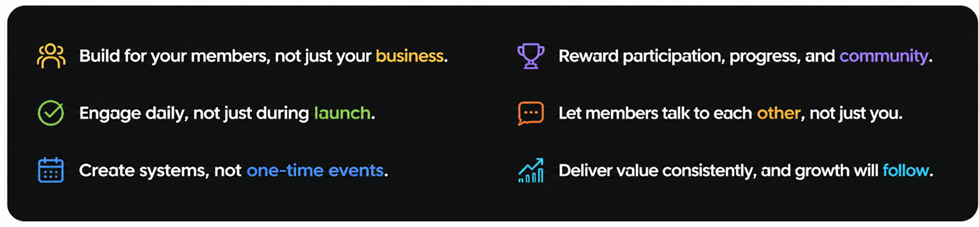
One of the most common mistakes new community owners make is assuming that more content automatically creates more value.
They spend weeks creating extensive resource libraries, recording dozens of videos, organizing hundreds of documents, and filling the server with channels before a single paying member arrives.
The result often looks impressive.
It also overwhelms new members.
When someone joins a server containing dozens of categories and countless unread channels, they don't immediately see opportunity. They often experience uncertainty. Instead of knowing where to begin, they're forced to decide between twenty different starting points.
That uncertainty creates friction, and friction is one of the biggest enemies of member retention.
The most successful communities aren't necessarily the ones with the largest libraries. They're the ones that clearly guide members toward their first meaningful win.
What Successful Paid Communities Have in Common
Although every niche operates differently, successful communities consistently share several characteristics.
First, they make onboarding incredibly simple. New members always know where to begin, who to talk to, and what action to take first.
Second, they create consistent opportunities for interaction rather than relying on spontaneous conversations. Discussion prompts, recurring events, accountability systems, and community traditions ensure that members always have a reason to participate.
Third, they focus on helping members achieve visible progress. Every discussion, resource, event, or activity ultimately supports the transformation members originally joined to achieve.
Finally, they build relationships between members instead of creating a one-way relationship with the community owner. Communities become resilient when members return because of each other, not only because the creator is online.
These principles become even more important as your community grows. A server with fifty members may survive through manual effort alone. A server with thousands of members requires systems that naturally encourage participation without depending entirely on the owner.
Setting Up Your Paid Discord Community
Building a successful community starts long before you create your first Discord category.
Many community owners open Discord immediately, begin creating channels, install several bots, customize permissions, and spend hours perfecting the server's appearance. While those tasks are important, they're not where successful communities begin.
The strongest communities are designed around a member journey, not around channel organization.
Define the Transformation Your Community Delivers
Before thinking about categories or permissions, define one simple question:
What transformation should every member experience after joining your community?
Your answer shouldn't describe your content. It should describe the outcome members are hoping to achieve.
For example:
- Learn to acquire agency clients consistently.
- Pass a funded trading challenge.
- Build a profitable Shopify store.
- Lose weight sustainably.
- Become a confident public speaker.
Every resource, discussion, event, and onboarding step should move members closer to that outcome.
Communities that remain focused on a single transformation are significantly easier to navigate because every conversation reinforces the same purpose.
Design Around the Member Journey
Once you've identified the transformation, map the journey members should experience from the moment they join.
A simple journey often looks like this:
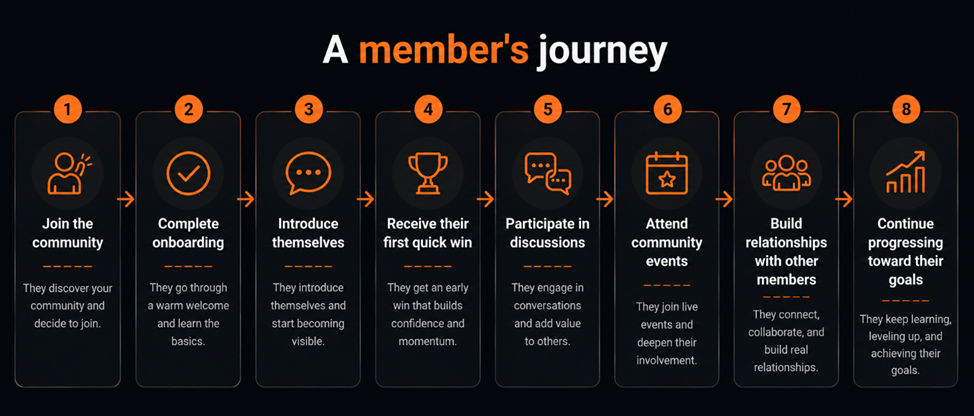
Notice that channels aren't part of this journey.
Channels simply support each stage.
When communities are designed from the member's perspective rather than the administrator's perspective, navigating the server becomes significantly more intuitive.
Build Fewer, Better Channels
A common misconception is that larger servers require more channels.
In reality, additional channels often divide conversations instead of encouraging them.
When discussions are spread across ten nearly identical channels, each conversation receives fewer replies. Members become unsure where to post, resulting in quieter discussions across the entire server.
Instead, prioritize clarity.
Each channel should have a clear purpose that members immediately understand.
Ask yourself three questions before creating a new channel:
- Does this serve a unique purpose?
- Will members actively use it every week?
- Would removing it make the community noticeably worse?
If the answer to those questions isn't a confident "yes," the channel probably isn't necessary.
Many thriving communities operate with surprisingly simple structures because simplicity encourages participation.
Build Daily Habits, Not Daily Content
Many creators believe they need to produce fresh content every day to keep members engaged.
That's rarely sustainable.
Instead of creating more content, focus on creating more habits.
Habits give members a reason to open Discord without requiring your constant involvement. Over time, these recurring activities become part of the community's identity, encouraging members to check in regularly even when there isn't a major announcement.
The key is consistency. Members should know that whenever they open the server, there's something they can immediately participate in.
A few simple daily activities can have a surprisingly large impact.
Daily Question of the Day
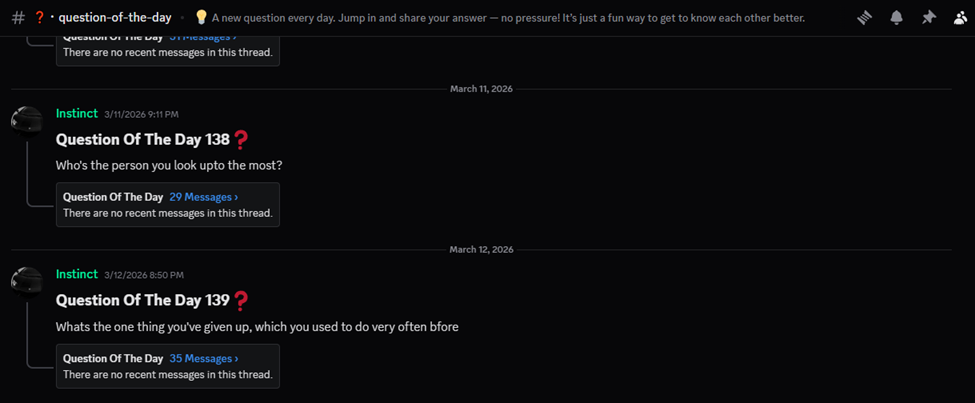
A well-crafted Question of the Day (QOTD) remains one of the simplest ways to encourage discussion.
Rather than asking generic questions, tailor them to your niche.
For example, an agency community could ask:
- What's one client objection you've struggled with this week?
- If you had to restart your agency today, what would you do differently?
- What's one tool you couldn't run your business without?
A trading community might ask members to discuss market sentiment, share lessons from recent trades, or explain what they're watching that day.
The goal isn't to collect dozens of replies. It's to create one conversation that members naturally build upon throughout the day.
Interactive Bots
Gamified bots can encourage casual participation without requiring significant effort from staff.
Popular examples include:
- Count Bot, where members work together to reach increasingly higher numbers without breaking the sequence.
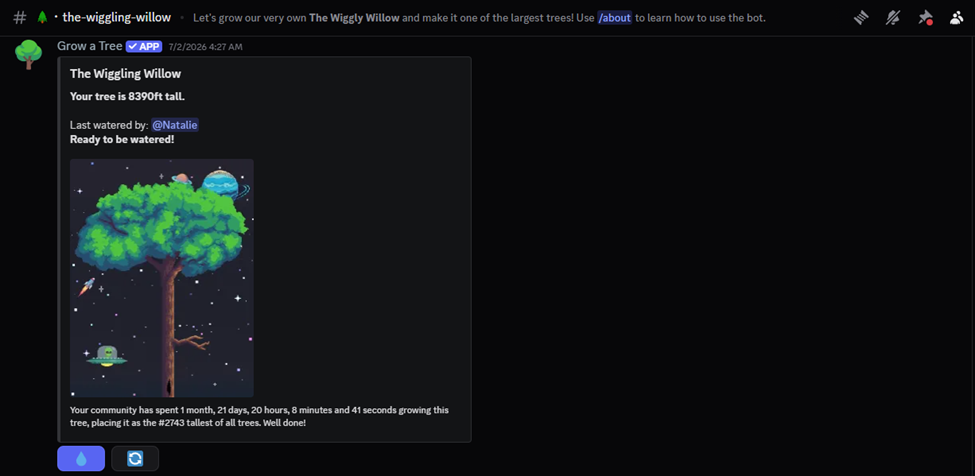
- Grow a Tree, where consistent participation helps the community collectively grow a virtual tree over time.
- Daily trivia or quiz bots that reward correct answers with points or leaderboard positions.
- Word games, emoji guessing games, or prediction games related to your niche.
These activities aren't designed to replace meaningful discussions. They're designed to lower the barrier to participation.
Someone who joins a counting game today may feel much more comfortable asking a business question tomorrow because they've already interacted with the community.
Small interactions often lead to larger ones.
Daily Accountability Check-ins
If your community revolves around achieving measurable goals, accountability should become part of the daily routine.
Encourage members to share:
- What they're working on today.
- Their biggest priority.
- A challenge they're facing.
- Something they completed yesterday.
These check-ins create visibility and encourage members to support one another.
Over time, accountability shifts from being something the community owner provides to something members naturally offer each other, making the community stronger and more self-sustaining.
Create Weekly Community Rituals
Daily activities keep the server active.
Weekly rituals give members something to look forward to.
Unlike one-off events, rituals become expected. Members begin planning around them, and regular attendance creates familiarity between community members.
Weekly activities could include:
- Live Q&A sessions.
- Office hours with the creator.
- Member networking calls.
- Community review sessions.
- Case study breakdowns.
- Weekly wins and progress celebrations.
- Expert interviews.
- Hot seat coaching sessions.
Consistency matters more than complexity.
A one-hour session every Thursday at the same time is far more effective than randomly scheduling events whenever you happen to be available.
Members should never wonder when the next opportunity to engage will be.
Instead, it should become part of their routine.
Give Members a Reason to Talk to Each Other
One of the strongest indicators of a healthy community is that conversations continue even when the owner isn't online.
That only happens when members begin forming relationships with one another.
Many communities unintentionally create a hub-and-spoke model where every conversation revolves around the creator. Members ask questions, the creator answers, and the discussion ends.
While this works initially, it becomes increasingly difficult to scale.
A healthier approach is to encourage member-to-member interaction.
Instead of immediately answering every question yourself, consider asking:
- Has anyone experienced something similar?
- How would you approach this?
- What worked for you?
These simple prompts invite experienced members to contribute while giving newer members multiple perspectives.
As relationships strengthen, the community gradually becomes less dependent on a single individual and more valuable as a whole.
Run Events That Members Actually Want to Attend
Hosting events is one of the most effective ways to strengthen a community, but only if members see them as valuable.
One of the biggest mistakes community owners make is organizing events simply because they feel they should. As a result, attendance gradually declines, and eventually the events stop altogether.
Successful community events solve a specific problem or create a shared experience that members can't get elsewhere.
Every event should answer one simple question:
Why would someone clear an hour from their schedule to attend this instead of watching the recording later?
If the answer is simply "because it's live," the event probably needs more work.
The strongest events encourage participation rather than passive viewing.
Instead of presenting for an hour while everyone listens silently, create opportunities for members to ask questions, share experiences, and contribute to the discussion.
Depending on your niche, recurring events might include:
- Weekly office hours where members can receive live feedback.
- Community masterminds where members work through current challenges together.
- Live case study breakdowns of successful projects or campaigns.
- Guest expert interviews followed by audience Q&A.
- Networking sessions designed to introduce members with similar goals.
- Build-in-public sessions where members showcase ongoing projects and receive constructive feedback.
Live interaction is difficult to replicate with recorded content. That's exactly what makes these events valuable enough to justify an ongoing subscription.
Just as importantly, consistency builds anticipation.
Instead of announcing events randomly, create a predictable calendar. If members know every Wednesday evening is reserved for a live Q&A, attending gradually becomes part of their weekly routine.
Community Competitions Create Healthy Momentum
People naturally enjoy making progress, measuring themselves against others, and being recognized for their efforts.
Community competitions tap into all three motivations without making the server feel overly competitive.
The key is to reward participation rather than simply rewarding whoever performs the best.
For example, if you're running a community for agency owners, you could host a monthly lead generation challenge where members compete to book the highest number of qualified meetings. Along the way, encourage participants to share their outreach strategies, lessons learned, and challenges they encountered. Even members who don't win still benefit from the discussions taking place throughout the competition.
Likewise, a fitness community might run a thirty-day consistency challenge instead of rewarding the member who loses the most weight. A trading community could encourage members to document their trading plans rather than celebrating the highest profits.
By rewarding discipline and participation instead of results alone, you create an environment where beginners feel comfortable joining in.
Competitions don't always need expensive prizes either. Recognition often carries more value than people expect.
Simple rewards include:
- A temporary champion role.
- A featured member spotlight.
- Access to an exclusive workshop.
- Free membership for the following month.
- Community merchandise.
- One-on-one coaching sessions.
- Early access to new resources or features.
The real objective isn't the prize itself.
It's the conversations that happen while members work toward a common goal.
Surprise Members with Freebies
Many community owners only give something away when they're launching a new product or trying to increase sales.
Instead, think of freebies as a way to reinforce member appreciation.
Unexpected rewards create memorable experiences because they aren't anticipated. A surprise template, exclusive resource, bonus workshop, or downloadable checklist demonstrates that you're continuously investing back into the community.
These giveaways don't always need to be educational either.
Depending on your audience, occasional rewards could include:
- Software subscriptions.
- Digital templates.
- Community merchandise.
- Gift cards.
- Free coaching sessions.
- Event tickets.
- Early beta access.
- Partner discounts.
The timing matters just as much as the reward.
Instead of announcing giveaways only during promotional campaigns, occasionally surprise active members for participating in discussions, helping newcomers, or consistently contributing to the community.
This reinforces the behaviors you want to encourage while making members feel genuinely appreciated rather than marketed to.
Celebrate Member Wins Frequently
Communities thrive when progress becomes visible.
If members only see questions and problems, the atmosphere gradually becomes transactional. However, when success stories appear regularly, the community begins to feel optimistic and motivating.
Create a dedicated space where members can share achievements of every size.
Not every win needs to involve earning thousands of dollars or reaching a major milestone.
Celebrate smaller victories too.
Examples include:
- Landing a first client.
- Completing a certification.
- Publishing a first YouTube video.
- Finishing a personal project.
- Remaining consistent for thirty consecutive days.
- Receiving positive customer feedback.
- Solving a difficult technical problem.
As community leaders, don't simply react with an emoji and move on.
Respond thoughtfully.
Ask follow-up questions.
Invite members to explain what worked.
Encourage others to learn from their experience.
These conversations transform individual success into shared learning, creating value for everyone involved.
Over time, success stories become one of the strongest forms of social proof inside the community. Existing members remain motivated, while prospective members immediately see evidence that people are achieving meaningful results.
Encourage Members to Create Content
Many communities unintentionally place all responsibility for creating value on the owner.
This approach works in the beginning, but it becomes increasingly difficult as the community grows.
The healthiest communities encourage members to become contributors rather than consumers.
For example, invite members to:
- Share workflows that improved their productivity.
- Record short tutorials demonstrating useful techniques.
- Recommend tools they've recently discovered.
- Publish case studies explaining successful projects.
- Review books, software, or industry resources.
- Answer frequently asked questions from newer members.
When members begin teaching each other, the community becomes significantly more valuable. Not only does this reduce pressure on the community owner, but it also creates a sense of ownership among contributors. People naturally feel more connected to environments they've helped build.
Recognize Contributions Publicly
Recognition reinforces the kind of participation you want to encourage.
Whether through special roles, contributor badges, leaderboard recognition, or monthly member spotlights, publicly acknowledging members who consistently help others encourages more people to contribute.
When members know their efforts are appreciated, they're far more likely to continue participating and helping others succeed.
Create Traditions Members Look Forward To
Every memorable community develops traditions over time.
These traditions don't need to be complicated. In fact, the simplest rituals are often the most effective because members quickly recognize and anticipate them.
Some examples include:
- Monday goal-setting discussions.
- Friday win celebrations.
- Monthly "Ask Me Anything" sessions.
- Community anniversaries.
- Seasonal tournaments.
- Holiday-themed events.
- Annual awards recognizing outstanding members.
- Quarterly showcases highlighting member projects.
These recurring traditions create a rhythm that gives the community its own personality.
Eventually, members stop attending because they're curious about the event itself. They attend because "it's what we always do."
That shift is incredibly powerful.
When traditions become part of your community's culture, engagement becomes much less dependent on constant effort from the owner.
A Community Should Feel Alive Every Day
One of the defining characteristics of a successful paid community is that it always feels active. Members shouldn't need a major announcement, product launch, or scheduled event as an excuse to open Discord. Instead, there should always be something happening that encourages them to check in, whether it's an interesting discussion, a member celebrating a milestone, an ongoing challenge, or a live event later in the day.
This doesn't mean your community needs constant activity every minute of every day. Rather, it should create the impression that progress is always being made. A member asking for advice, another sharing a recent success, staff engaging in conversations, or participants competing in a weekly challenge all contribute to an environment that feels welcoming and dynamic. These seemingly small interactions collectively create momentum, making the server feel like a place where people are genuinely learning, collaborating, and supporting one another.
The most successful communities achieve this not by relying on spontaneous conversations, but by implementing systems that consistently encourage participation. Daily discussion prompts, recurring events, community competitions, accountability check-ins, member spotlights, and active staff engagement all work together to create a rhythm that members quickly become accustomed to. Over time, these recurring activities become part of the community's culture, giving members a reason to return even when they don't have an immediate question to ask.
Ultimately, your goal isn't to manufacture excitement every day. It's to build systems that naturally create it. When members know they'll always find valuable conversations, familiar faces, and opportunities to participate, checking Discord becomes part of their routine rather than another task on their to-do list. That's when a paid community evolves from being a collection of channels into a place that people genuinely enjoy being part of.
Turning a Paid Community Into Income
Running an engaged community is rewarding, but for many creators and business owners, the ultimate goal is to build a sustainable business around it.
A paid Discord community creates an opportunity to generate recurring revenue while building stronger relationships with your audience. However, successful monetization doesn't begin with choosing a monthly subscription price. It begins by consistently delivering enough value that members feel confident renewing their membership month after month.
Many community owners spend significant time thinking about how to attract new subscribers while overlooking the members they've already earned. In reality, long-term profitability is driven far more by retention than acquisition. A community that retains members for twelve months will almost always outperform one that constantly replaces members who leave after only a few weeks.
Recurring revenue isn't built through aggressive selling.
It's built through consistent member success.
Choose a Pricing Model That Matches Your Community
There is no universal pricing strategy for paid communities.
The right model depends on the level of access, support, and transformation you provide.
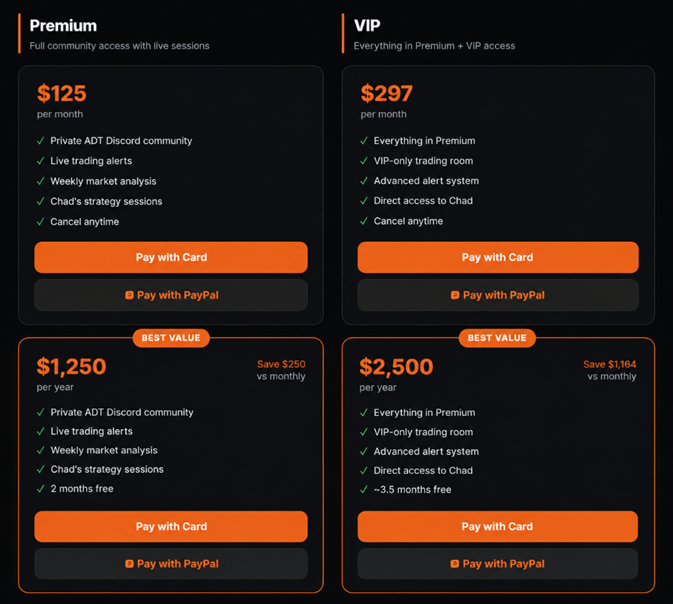
Some communities operate with a single membership tier, giving every subscriber access to the same resources, discussions, and events. This approach keeps things simple and works particularly well for communities built around collaboration and shared learning.
Other communities benefit from multiple membership levels.
For example, an entry-level plan might include access to educational resources and community discussions, while higher tiers provide additional benefits such as:
- Group coaching.
- Exclusive workshops.
- Private networking channels.
- Direct access to mentors.
Regardless of the model you choose, every pricing tier should offer a clearly defined experience.
Members should immediately understand what they're paying for and why each tier exists.
Avoid creating multiple subscription levels that differ only by a handful of extra channels or downloadable resources. Instead, differentiate your plans through the depth of support, exclusivity, and opportunities for interaction.
Most importantly, keep your pricing easy to understand.
Complicated membership structures often create unnecessary friction during the purchasing process.
Focus on Increasing Lifetime Value, Not Just New Sales
Many creators celebrate every new member who joins the community.
Far fewer celebrate the member who renews for their twelfth consecutive month.
Yet that long-term subscriber is often significantly more valuable than several short-term members combined.
Instead of asking:
"How can I get more people to join?"
Regularly ask yourself:
"Why would someone still be excited to be here six months from now?"
Answering that question naturally shifts your focus toward improving retention.
Communities that continuously introduce fresh discussions, host valuable events, recognize member achievements, and create new opportunities for collaboration give members compelling reasons to remain subscribed. Over time, those recurring experiences become far more valuable than a growing archive of static resources.
The strongest communities evolve alongside their members. As members become more experienced, the community should continue offering new challenges, advanced discussions, and opportunities to contribute. This sense of progression prevents long-term members from feeling as though they've "outgrown" the community.
Encourage Referrals Through Great Experiences
The most effective marketing strategy for any paid community is a genuinely satisfied member.
People naturally recommend communities where they've learned something valuable, built meaningful relationships, or achieved measurable results. Those recommendations are far more persuasive than advertisements because they're based on real experiences.
While referral programs can certainly help accelerate growth, they should complement an already exceptional member experience rather than compensate for a weak one.
A simple referral system might reward members with benefits such as:
- A free month of membership.
- Exclusive workshops or bonus resources.
- Community merchandise.
- Additional coaching sessions.
- Access to premium networking opportunities.
However, don't underestimate the power of recognition.
Publicly thanking members who introduce new people to the community reinforces positive behavior while strengthening the sense that everyone is contributing to the community's growth.
Ultimately, referrals are earned through trust.
Communities that consistently help members achieve meaningful outcomes rarely struggle to generate word-of-mouth recommendations.
Scale Without Losing Your Community Culture
Growth is exciting, but it also introduces new challenges.
As communities become larger, it's no longer possible for one person to welcome every member, answer every question, or participate in every discussion. Without clear systems in place, engagement can gradually become less personal, leaving new members feeling overlooked.
The solution isn't simply hiring more moderators.
It's creating processes that preserve your community's culture as it grows.
Document how new members are welcomed, how events are hosted, how staff engage in conversations, and how questions are handled.
Encourage moderators to participate as community members rather than simply enforcing rules, and empower experienced members to help newcomers whenever possible.
Communities scale successfully when responsibility is shared. As more members begin answering questions, organizing discussions, and celebrating each other's successes, the community becomes increasingly resilient without relying entirely on the founder.
Growth should strengthen your culture, not dilute it.
Use Automation to Enhance the Member Experience
Automation often carries a negative reputation because many people associate it with impersonal interactions.
When implemented thoughtfully, however, automation doesn't replace human engagement. It supports it.
Automated systems can:
- Welcome new members.
- Answer common questions.
- Assign roles.
- Send event reminders.
- Surface helpful resources.
- Encourage participation at key moments throughout the member journey.
These routine tasks free up community managers to focus on what matters most: building genuine relationships with members.
For example, instead of manually directing every newcomer to the correct channels, an automated onboarding flow can guide them through the first few steps while ensuring no one feels lost. Event reminders can improve attendance without requiring staff to send repetitive announcements, and follow-up messages can re-engage members who haven't participated for some time.
The most effective communities combine automation with authentic human interaction.
Technology should reduce repetitive work, not remove the personal touch that makes communities valuable in the first place.
How SalesGenie Helps Communities Scale Engagement
As your community grows, maintaining the same level of personal engagement becomes increasingly difficult. New members join at different times, conversations happen across multiple channels, and moderators can't realistically start one-on-one conversations with everyone.
This is where intelligent automation can make a meaningful difference.
Rather than simply sending automated welcome messages, platforms like SalesGenie are designed to create personalized onboarding experiences that feel conversational rather than transactional. New members can be welcomed individually, guided through the server, encouraged to introduce themselves, and directed toward the resources or discussions most relevant to their goals.
More importantly, engagement doesn't stop after onboarding. SalesGenie can continue nurturing members by answering common questions, following up with inactive users, surfacing relevant content, and ensuring every member receives timely guidance throughout their journey.
By handling repetitive engagement tasks, community managers have more time to focus on meaningful conversations, hosting events, and strengthening relationships with existing members. Instead of replacing human interaction, automation supports it by ensuring that no member feels forgotten simply because the community has grown.
When combined with the engagement strategies discussed throughout this guide, thoughtful automation helps communities deliver a consistently high-quality experience at scale without sacrificing the personal connections that make paid communities successful.
What You Should Do Next
Start by looking at your community through the eyes of a new member. Review your onboarding process, simplify areas that create unnecessary friction, and build consistent opportunities for members to engage every day. Small improvements made consistently will always have a greater impact than one major overhaul.
As your community grows, maintaining that same level of engagement naturally becomes more challenging. Welcoming every new member, answering repetitive questions, and keeping conversations active can quickly consume valuable time. The right automation tools can help you streamline these repetitive tasks while preserving the personal experience your members expect, allowing you to spend more time building relationships instead of managing routine workflows.
At the end of the day, the goal isn't simply to grow a Discord server.
It's to build a community that members genuinely enjoy being part of, and one they're excited to return to every day.